I just finished this book, winner of the 2001 Booker Prize, True History of the Kelly Gang, by Peter Carey. Like the author's another Booker winning novel, Oscar and Lucinda, it's a story staged in the early days of Australia. The Kelly Gang story is well known among Australian in a similar way The Water Margin among Chinese, because the main characters are all considered outlaws by the authorities in their time, but I think it's also the reason why their stories are passed on by generation and generation. Both stories represent a window for us to look back to the society our ancestors had been through and in some way, make us understand who we are and where we come from.
The book is called a novel because the author provides a wife and a daughter to the main character, Ned Kelly. By doing so, what I read is actually a vivid story with warm human touch, not just a cold description telling about a historical incident. I think it's the magic that a great novelist can do and in which readers can enjoy. Like other Booker Prize winners, The Remains of the Day, Staying On, The English Patient and some more others, the judges of the prize seem to prefer stories that have historical depth and provide readers with a particular way to discover an important period of time within a society.
There are a lot of movies about the Kelly Gang, but this one with some well known actors in it has not been released in Taiwan. Too bad.
Showing posts sorted by relevance for query booker. Sort by date Show all posts
Showing posts sorted by relevance for query booker. Sort by date Show all posts
Sunday, November 21, 2004

Saturday, July 12, 2008
 Ben Okri's 1991 Booker Prize winner, The Famished Road, brings me to a continent that I know little about: Africa. In fact, Okri is the last one of the only three African-born authors who have won the Booker Prize, following Nadine Gordimer in 1974 and J. M. Coetzee in 1983. A native Nigerian, Okri experienced first-hand the political and social struggle of his nation. Through an abiku child's narrative, the story depicts the oscillation between life and death, between humans and spirits, and between realities and fantasies. The famished road is always hungry; yet, people relies on it to reach their destinations--there are hardships, but there are also hopes.
Tuesday, February 19, 2008
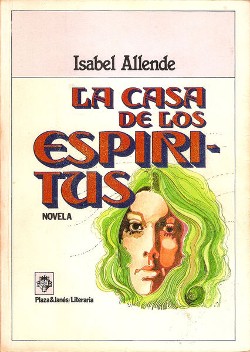 I would probably never read Isabel Allende's The House of the Spirits if I did not have the anonymous comment on my blog entry about Midnight's Children, another novel written in the style of magic realism. The commentator was not really recommending the novel because she concerned that the novel is "definitely more appealing to female readers."
 I decided to give it a try anyway.
The original novel was written in Spanish and hence not eligible for a consideration of Booker Prize. However, I suspect that the novel has certain Booker Prize qualities to it, namely the social and political context of a Latin American country that spanned four generations.
It was soon clear that the three main female characters, Clara, Blanca and Alba, were the backbone of the story, but it was also paralleled by a central male character, Esteban, who lived long enough to witness the whole story.
As a male reader, I would say the novel is also quite attractive to me.
Sunday, November 26, 2006
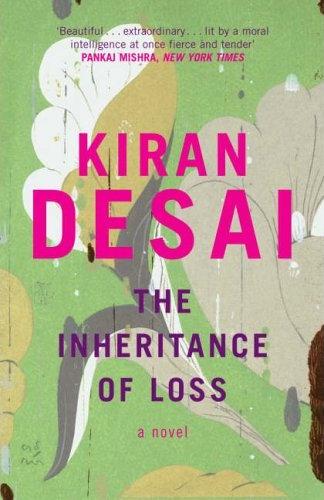 Kiran Desai is the youngest woman (at age of 35) to win the prestigious Man Booker Prize for Fiction. See a collection of book reviews:
- Luminous family saga bridges eras, cultures by Ann Harleman @ The Boston Glode (20060104)
- "The Inheritance of Loss": A moving tale of honesty and horror by Bharti Kirchner @ The Seattle Times (20060120)
- Review by Poornima Apte @ MostlyFiction (20060129)
- Hearts in search of home by Marjorie Kehe @ Powell's Books (20060130)
- Wounded by the West by Pankaj Mishra @ The New York Times (20060212)
- Empires, family in flux by Sandip Roy @ San Francisco Chronicle (20060226)
- Review by Fiona Pryor @ BBC News (20061010)
- Review by James Ley @ The Age (20061020)
Related blog entries:
Thursday, May 31, 2012
The Finkler Question
 |
| The Finkler Question |
 , winner of the 2010 Man Booker Prize, is a tough nut to crack. At the least, it took me several times of borrowing and re-borrowing from Taipei Public Library, with three different library cards and through the course of almost one year.
Under the facade of a comic novel, there lies a deeply tangled question about what it is like to be a Jew. This question is presented through multiple dimensions, constructed by different characters in the novel: Julian Treslove, a non-Jew but who also wants to be a Jew; Julian's old classmate, Sam Finkler, the first Jew he knows and who is part of the self-loathing ASHamed Jews; their former teacher Libor Sevcik, a Czech Jew and a contrast of Sam. They are joined by three female characters: Libor's beloved wife, Malkie, a pianist and died at age 80; Sam's wife, Tyler, who converted herself into a Jew and died young of cancer; and Hephzibah, Libor's niece and Julian's first relationship with a Jewish woman. The novel is of course not limited to these characters. It expands and covers many more aspects of human relationships, all of which are depicted by Mr. Jacobson's thought-provoking and quotable phrases.
I have to admit, however, that from time to time, I would feel a little nauseating while consuming so many paragraphs regarding anything Jewish. This kind of exhaustive analysis is probably hard to be found elsewhere.
A collection of book reviews:
- The Finkler Question by Howard Jacobson: review by Gerald Jacobs @ The Telegraph (20100728)
- The Finkler Question by Howard Jacobson reviewed by Edward Docx @ The Observer (20100815)
- The Finkler Question Reviewed by Anne Trubek @ Barnes & Noble Review (20101012)
- Howard Jacobson's Booker-winning "Finkler Question," reviewed by Ron Charles @ The Washington Post (20101013)
- Jewish Funhouse Mirror Is Alive and Not So Well by Janet Maslin @ The New Your Times (20101020)
Tuesday, May 31, 2011
 It turns out that I spent exactly one year to finish reading Wolf Hall. As if one year was a deadline I needed to meet, when I was on my way to work yesterday, I sat on a bench at a near-by park, reading the final few pages, determined not to put down the book until the last sentence of the book was read.
Again, this Man Booker Prize winner shows us a memorable snapshot of an instance in time. It tells us an extraordinary story during a turning point in England's history, when the rise of Thomas Cromwell coincides with the separation of Henry VIII from his first wife, Catherine of Aragon, and of the Church of England from the Catholic Church. Since I have no burden of previous knowledge on that part of history, Cromwell described in the book seems smart and capable, almost a role model for anyone who is not a noble descendent.
Now, Wolf Hall officially enters into the archive of Man Booker Prize winners I have read. It might not be one of my favorites, but its use of many 'he' as a pronoun and many Thomas as first name definitely makes it unforgettable.
Thursday, January 04, 2007
 I returned and finished reading Midnight's Children, the second novel by Salman Rushdie, that brought fame and confidence to the author. His first novel, Grimus, "was universally trashed, sold less than 900 copies and was remaindered," said Mr. Rushdie when he won the Booker Prize in 1981.
I had little knowledge of India's independence before reading the novel. With the story unfolding, I began to understand the context, although the style of magic realism made the story somewhat surreal and efforts must be made in order to appreciate what was real. Nevertheless, the elements of imagination are what I like the most in this book.
An unexpected benefit of reading the novel is that it becomes a topic when I converse with my Indian classmates. I assume that most of them read or know about this book, and apparently they do.
- A NOVEL OF INDIA'S COMING OF AGE by Clark Blaise @ The New York Times (19810419)
- Books of The Times by John Leonard (19810423)
- 'Midnight's Children' Wins Special Booker Prize by John Darnton (19930921)
- The birth pangs of Midnight’s Children by Salman Rushdie @ The Times (20060401)
- Full Interview and Clips of Bill Moyers Conversation with Rushdie in 2006 on PBS
Sunday, September 16, 2007
The new layout of the Man Booker Prize archive, where 40 prize-winning books are listed in a 5x8 grid, looks stunning. Reading all of them is one of my ongoing personal reading projects, which started from The English Patient by Michael Ondaatje. Not surprisingly, the 1996 film adaptation of the same novel was what inspired me to undertake the project.
See also my other posts about reading Man Booker Prize-winning books.
See also my other posts about reading Man Booker Prize-winning books.
Saturday, February 04, 2006
- The last summer by Geoff Dyer @ Telegraph (20040328)
- Between the lines by Alfred Hickling @ Guardian (20040410)
- Review by Alex Clark @ The Sunday Times (20040411)
- AIDS an innocence by David Robson @ Telegraph (20040425)
- Welly-Whanging by Thomas Jones @ London Review of Books (20040520)
- Review by Michael Dirda @ The Washington Post (20040926)
- "The Line of Beauty": Growing up among greed, vanity and drugs in '80s London by Michael Upchurch @ The Seattle Times (20041010)
- Lines of beauty and depravity by Ron Charles @ The Christian Science Monitor (20041026)
- The Last Good Summer by Anthony Quinn @ The New York Times (20041031)
- SURFACE CRACKS: An outsider parties with the privileged of 1980s Britain in Booker Prize winner by David Wiegand @ San Francisco Chronicle (20041031)
- The double curve by Henry Hitchings @ Powells.com (20041031)
- In Thatcher's London, sex, drugs, and the ruling class by Don Lee @ Boston Globe (20041031)
- In Waugh's Territory, Shadowed by AIDS by Michiko Kakutani @ The New York Times (20041123)
- Review @ Publishers Weekly
- Review by Daniel Levisohn @ About.com
Thursday, November 04, 2004
I have followed The Man Booker Prize for several years. The 2004 winner is Alan Hollinghurst for his fourth novel, The Line of Beauty. The prize is one of world's most prestigious awards for fiction and I think it should be a good guidance for me if I would like to read some interesting books in English. Amazon has a complete list for all the shortlisted books and that's where I bought a dozen of them. My first one, which was not bought on-line, is The English Patient by Michael Ondaatje. The book first caught my attention because of the beautifully adopted silver screen version made by Anthony Minghella. The movie was also a big winner of Oscar in 1997. Two other good adoptions from prize winning books are Schindler's List by Steven Spielberg and The Remains of the Day by James Ivory. But not every adaptation is a big success like the three just mentioned. I have also seen "Oscar and Lucinda" and "Possession" both in book and movie. Although the movies are less then success, it's still fun to observe the differences between the two forms.
The official web site also mentioned that the 2002 Man Booker winner, Life of Pi, has been optioned for film and M Night Shyamalan will write the screenplay and direct. The book is so great and fun to watch and the director is so creative with his previous films that I am looking forward to the movie to become another good adoption.
The official web site also mentioned that the 2002 Man Booker winner, Life of Pi, has been optioned for film and M Night Shyamalan will write the screenplay and direct. The book is so great and fun to watch and the director is so creative with his previous films that I am looking forward to the movie to become another good adoption.
Tuesday, October 20, 2009
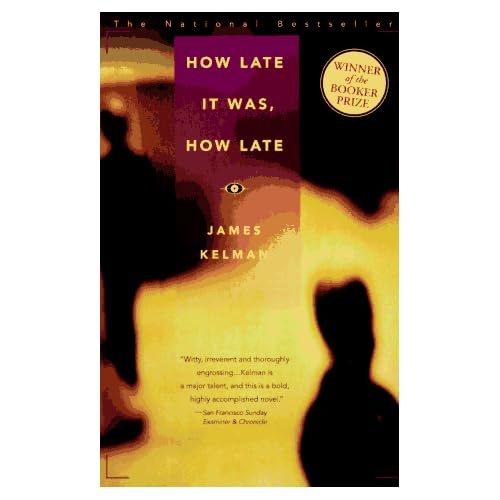 How Late It Was, How Late by James Kelman is such a peculiar novel that I picked up to read for several times and abandoned also for several times until I had run out of Booker-Prize-winning novels and left with no choice but finishing it.
The novel has nothing similar to anything I have read before. Written in Scottish dialect, its phrases seem strange and informal. The jumpy narrative, accompanied by glaring invective and defective logic, require extra efforts to comprehend. This is not the best English-learning material I would recommend, but the technique employed in this novel creates an unforgettable atmosphere that makes it worth reading and the prize.
The thing is he was going naywhere, naywhere. So he needed to clear the brains, to think; think, he needed to fucking think. It was just a new problem. He had to cope with it, that's all. that was all it was. Every day was a fucking problem. And this was a new yin. So ye thought it out and then ye coped. That was what a problem was, a thing ye thought out and then coped with, and ye pushed ahead; green fields round every corner, sunshine and blue skies, streets lined with apple trees and kids playing in the grass, the good auld authorities and the headman up there in his wee central office, good auld god with the white beard and the white robe, sitting there watching ye from above, the gentle wee smile, leading the children on. That was fair enough. It was just the now. It was this minute here. That was all; once ye got through it ye were past it.Page 37, How Late It Was, How Late
Thursday, August 07, 2008
Can you feel the love tonight? It is supposed to be a romantic night of Qi Xi, also known as Chinese Valentine's Day. I found a paragraph for tonight from the book I have been reading, mostly during my commute on Taipei MRT.
There are so few people given us to love. I want to tell my daughters this, that each time you fall in love it is important, even at nineteen. Especially at nineteen. And if you can, at nineteen, count the people you love on one hand, you will not, at forty, have run out of fingers on the other. There are so few people given us to love and they all stick.Page 15, The Gathering by Anne Enright
Winner of the Man Booker Prize 2007
Monday, May 31, 2010
Wolf Hall by Hilary Mantel, the winner of the 2009 Man Booker Prize, was one of the birthday presents that Evania gave me. I will be reading it in the following days (probably months). The other gift was a red polo shirt, the missing color in my wardrobe's day-to-day polo shirt lineup. Now I have a blue one for Monday, a pink one for Tuesday, a green with white strips one for Wednesday, a black and white one for Thursday, and a red one for Friday.- Read the book's reviews from the complete review.
Thursday, January 03, 2008
The semester turned out to be as rough as the book. I couldn't keep the reading going. It was only after the semester ended that I started reading the book once again during the 24-hour trip back to Taiwan. Little did I know that sitting at my economy-class seat would propel me to finish the book. I was busy finishing the story while my plane, a Boeing 747-400, took off from Kansai International Airport--the intensity of the ending was such a perfect match to the intensity of an airplane talking off.
Read reviews:
Tuesday, February 23, 2010
 Life of Pi by Yann Martel has been one of my favorite Man Booker Prize-winning novels. Recently, I borrowed a copy from Taipei County Library to review the story and imagined how Ang Lee might adapt it into a movie, which according to the Oscar-winning director, "is a hard one to crack". But apparently, Lee had made a breakthrough in cracking the structure of the movie. I am eager to see what the breakthrough will be in two years.
Wednesday, April 09, 2008
 |
| From Boston Trip |
>Answer: John Banville's "The Sea" and Yann Martel's "The Life of Pi".<
Tuesday, September 09, 2008

It was in such situation that made the death of Liam, Veronica's eleven months older brother and close ally, truly unbearable. Through recalling memories in their childhood, Veronica sought an explanation of her dearest brother's walking into the sea and getting drowned.
I did that once, seeking an explanation of a close friend's suicide. I tried to imagine why he decided to jump off the building and left everyone knowing him behind. I found myself reached an explanation, but like Veronica, we were not sure if our explanation was the truth or simply a delusion.
- The din within by AL Kennedy @ The Guardian (20070428)
- Intimate relations by Adam Mars-Jones @ The Observer (20070506)
- Liam's Wake by Liesl Schillinger @ New York Times (20070930)
- Irish eyes, American influence by Tim Rutten @ Los Angeles Time (20071003)
Friday, April 30, 2010
 An alternative view of India is presented in The White Tiger by Aravind Adiga, Winner of the Man Booker Prize 2008, through a serious of letters written by the protagonist, Balram Halwai and addressing to the premier of People's Republic of China (PRC), Wen Jiabao.
On hearing the radio announcing the premier's upcoming visit to Bangalore, Balram felt the urge to write down his own experience as a true entrepreneur in India because he knew that the premier might miss the truth under the diplomatic veneer. A "half-baked" Indian from the Darkness, Balram's story revealed the harsh living conditions of the poor and how social injustices kept them from escaping the "coop". What it takes for Balram to escape was not something glory that will be included in the government brochure.
Mr. Premier,
Sir.
Neither you nor I speak English, but there are some things that can be said only in English.
My ex-employer the late Mr. Ashok's ex-wife, Pinky Madam, taught me one of these things; and at 11:32 p.m. today, which was about ten minutes ago, when the lady on All India Radio announced, "Premier Jiabao is coming to Bangalore next week," I said that thing at once.
In fact, each time when great men like you visit our country I say it. Not that I have anything against great men. In my way, sir, I consider myself one of your kind. But whenever I see our prime minister and his distinguished sidekicks drive to the airport in black cars and get out and do namastes before you in front of a TV camera and tell you about how moral and saintly India is, I have to say that thing in English.
...
You hope to learn how to make a few Chinese entrepreneurs, that's why you're visiting. That made me feel good. But then it hit me that in keeping with international protocol, the prime minister and foreign minister of my country will meet you at the airport with garlands, small take-home sandalwood statues of Gandhi, and a booklet full of information about India's past, present, and future.
That's when I had to say that thing in English, sir. Out loud.
...
...the phrase in English that I learned from my ex-employer the late Mr. Ashok's ex-wife Pinky Madam is:
What a fucking joke.
- Read an excerpt from the novel.
- Read the book's reviews from the complete review.
Friday, August 07, 2009
The Inheritance of Loss by Kiran Desai just moved from the unread list to the read list of my Booker-winning novels.Could fulfillment ever be felt as deeply as loss? Romantically she decided that love must surely reside in the gap between desire and fulfillment, in the lack, not the contentment. Love was the ache, the anticipation, the retreat, everything around it but the emotion itself. (page 3)The "she" in the quoted paragraph above refers to Sai whose losses including her parents who died in Russia, her grandfather who lived in limbo between the past colonizing power and now independent home country, and Gyan whom she fell in love with but grown apart because an insurgency of local people had transformed into a fight between two lovers.
Could fulfillment ever be felt as deeply as loss? Rationally, I decided that if you still believe in love, you pursuit to fulfill it. You could divide it into small achievable steps, but never dawdle on your way. The key to feel something deeply was not deciding which things--you could feel deeply about anything. The feeling could only be as deep as the time you spent feeling.
Saturday, April 02, 2005
A great review from The New York Times: 'Saturday': One Day In the Life, which I spent several mornings reading while commuting on the MRT. Ian McEwan, who won a Booker Prize in 1988 for Amsterdam, is the author of the book, Saturday, that comes under criticism in the article. I have not read his latest novel but I did read the prize-winning one a couple of years ago. It's a very short one, the only impression that still exists in my memory when I try to recollect. The brief introduction on his official web site indicates that the author "took a creative writing course taught by the novelists Malcolm Bradbury and Angus Wilson". That's one of the elements I expect to find when reading a novel, the creativity. However, attending a creative writing course is not a prerequisite to be a novelist, is it?
Subscribe to:
Posts (Atom)